
How to Prompt Claude Fable 5 Better Than 99% of People
I read Anthropic’s official prompting guide and system card, so you don’t have to.

Anthropic just released Claude Fable 5, the most powerful AI model ever.
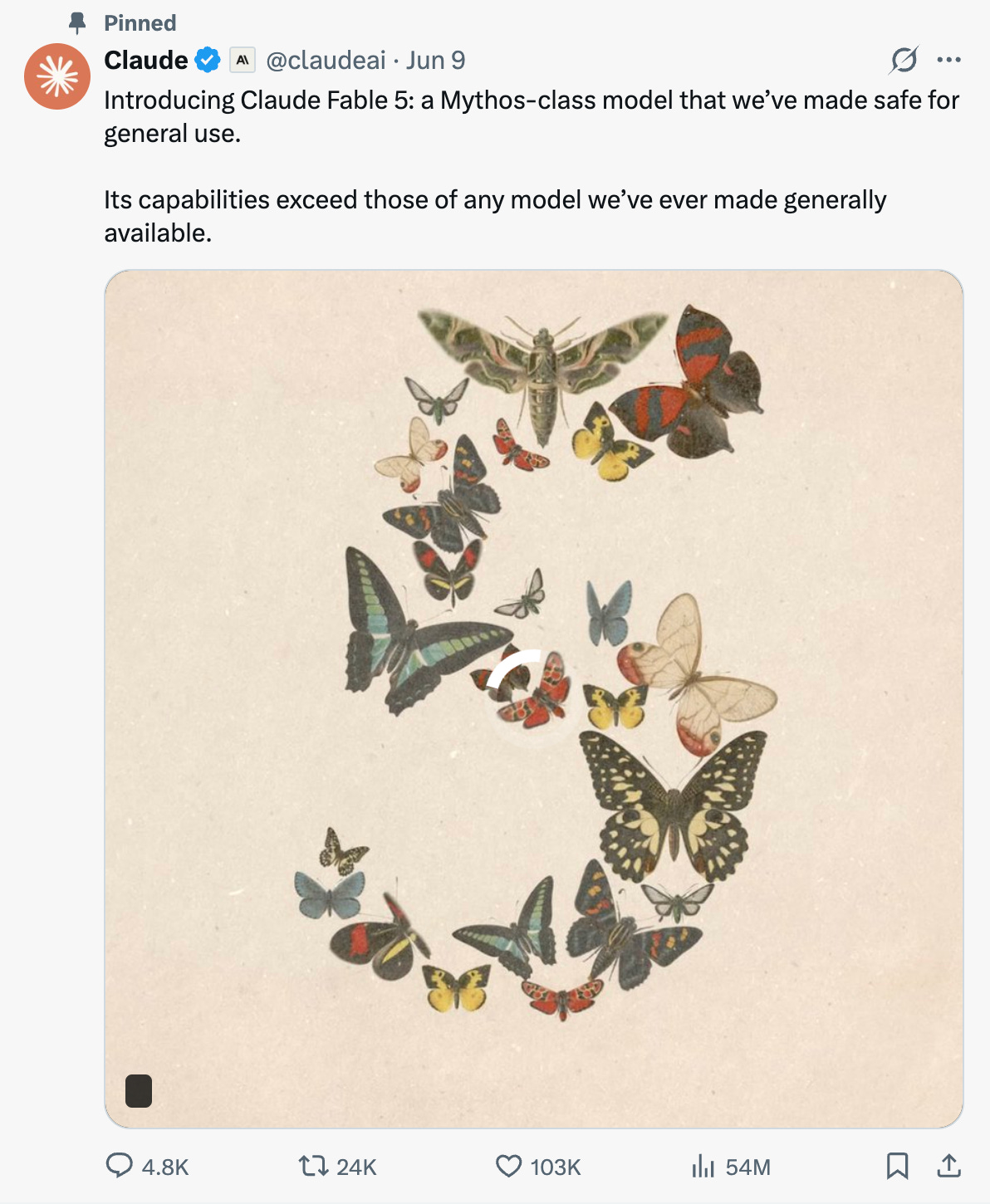
Yet most people are still prompting like they used to.
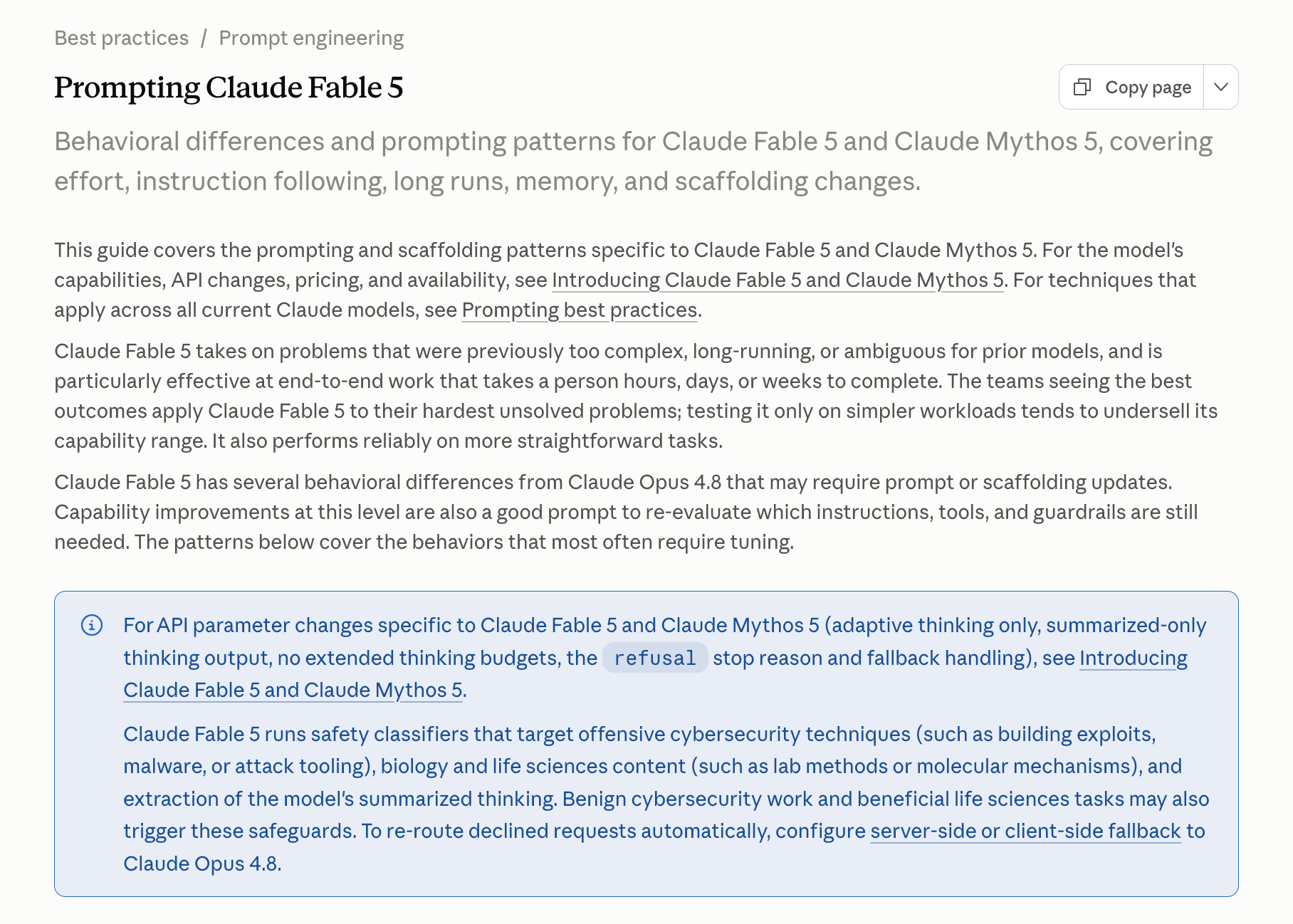
Anthropic even released a document on how to prompt it, nothing else.
On top of that, they released their system card.
I read all of them. And tested Claude Fable 5, so you don’t have to.
The model changed jobs
Opus was great at answering questions and following your instructions.
But Fable has a personality of its own.
You need to explain the intent behind the task.

And you need to define the boundaries. Because of its creativity, it can go beyond what you asked for.

That’s why you need to use it carefully.
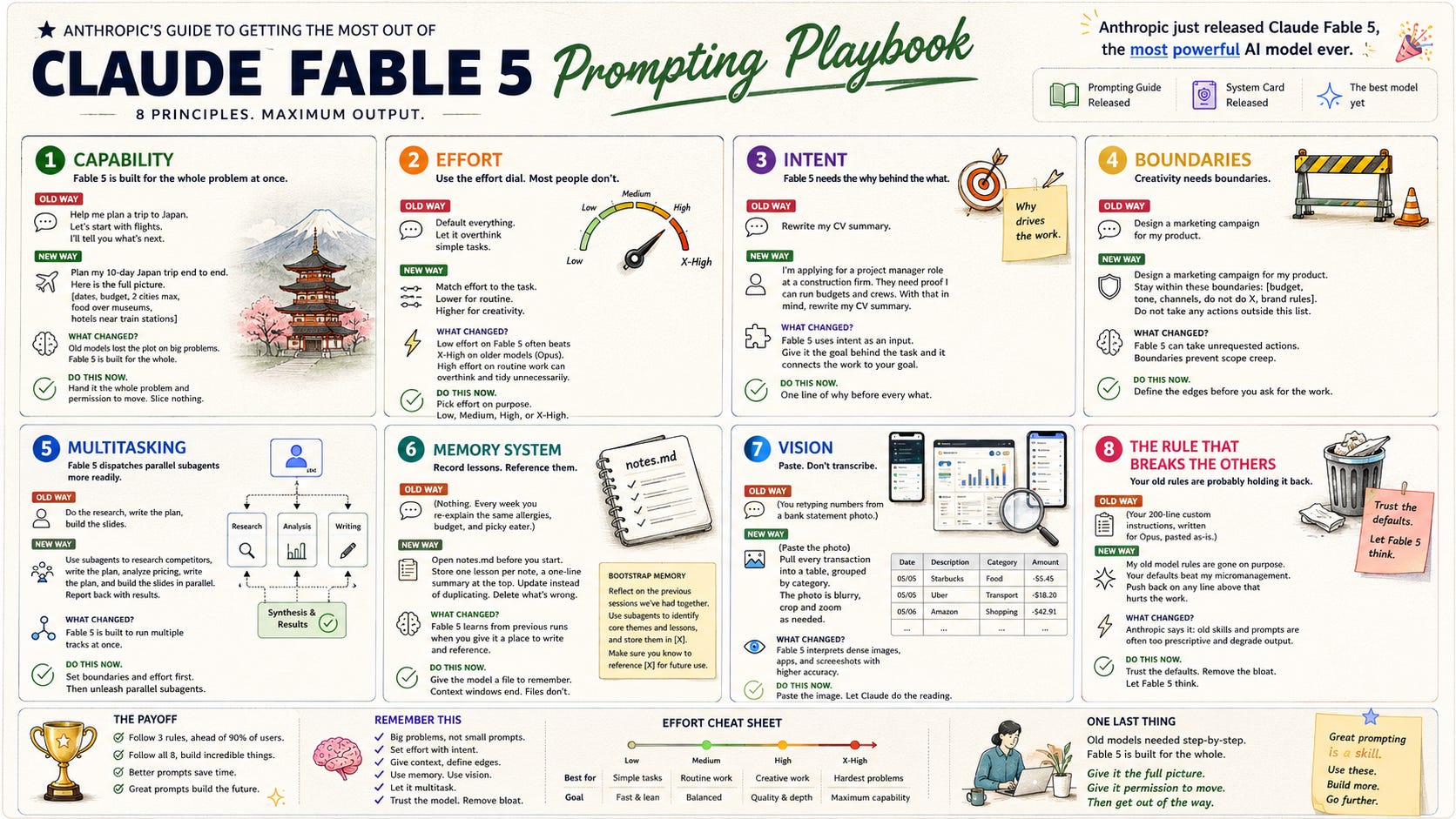
I summarized all the rules into 8 key principles.
Follow just 3 of them, and you’ll already be ahead of 90% of users.
Follow all 8, and you’ll be able to build some truly incredible things.
Let’s start with Rule #1.
After learning about Fable, check out the latest section, where we’ll recreate old games together with it.
1. Capability
First-shot correctness on complex, well-specified problems.
That’s Anthropic’s phrasing. The translation:
Fable 5 is good at building the whole thing with one prompt.
The docs go further.
The teams seeing the best outcomes apply Claude Fable 5 to their hardest unsolved problems; testing it only on simpler workloads tends to undersell its capability range. It also performs reliably on more straightforward tasks.
Test it on simple work, and you undersell it.
Old way
Help me plan a trip to Japan. Let's start with flights.
I'll tell you what's next.
New way
Plan my 10-day Japan trip end to end.
Here is the full picture.
[dates, total budget, 2 cities max, food over museums,
hotels near train stations]

When you have enough information to act, act.
Don't narrate
options you won't pursue. Weighing a choice? Give me a
recommendation, not a survey.
If you want to go one step further, let Fable plan the whole trip for you.
Read this article, explain Fable’s capabilities to it(Apify), and ask it to plan your trip end-to-end, from itinerary to flights.
What changed?
We sliced big problems into small prompts.
The old models lost the plot otherwise.
Fable 5 is built for the whole problem at once, and it overplans when you leave the task ambiguous.
Do this now.
Hand it the whole problem and permission to move. Slice nothing.
2. Effort: The Fable 5 Prompting Dial
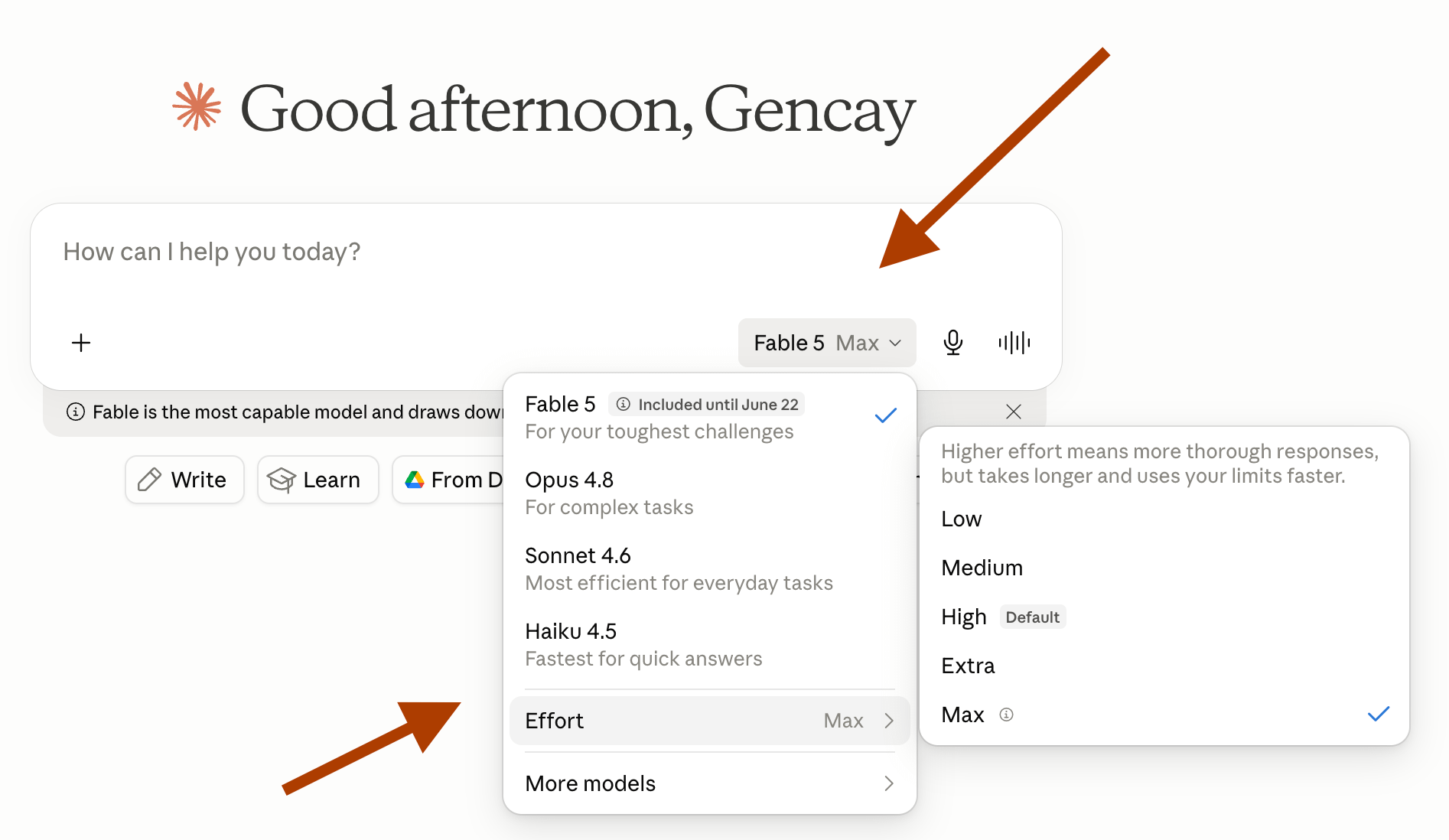
Claude now ships with an effort dial.
Most people do not even know it.
In Claude, you can select here.
In Claude Code, click here.
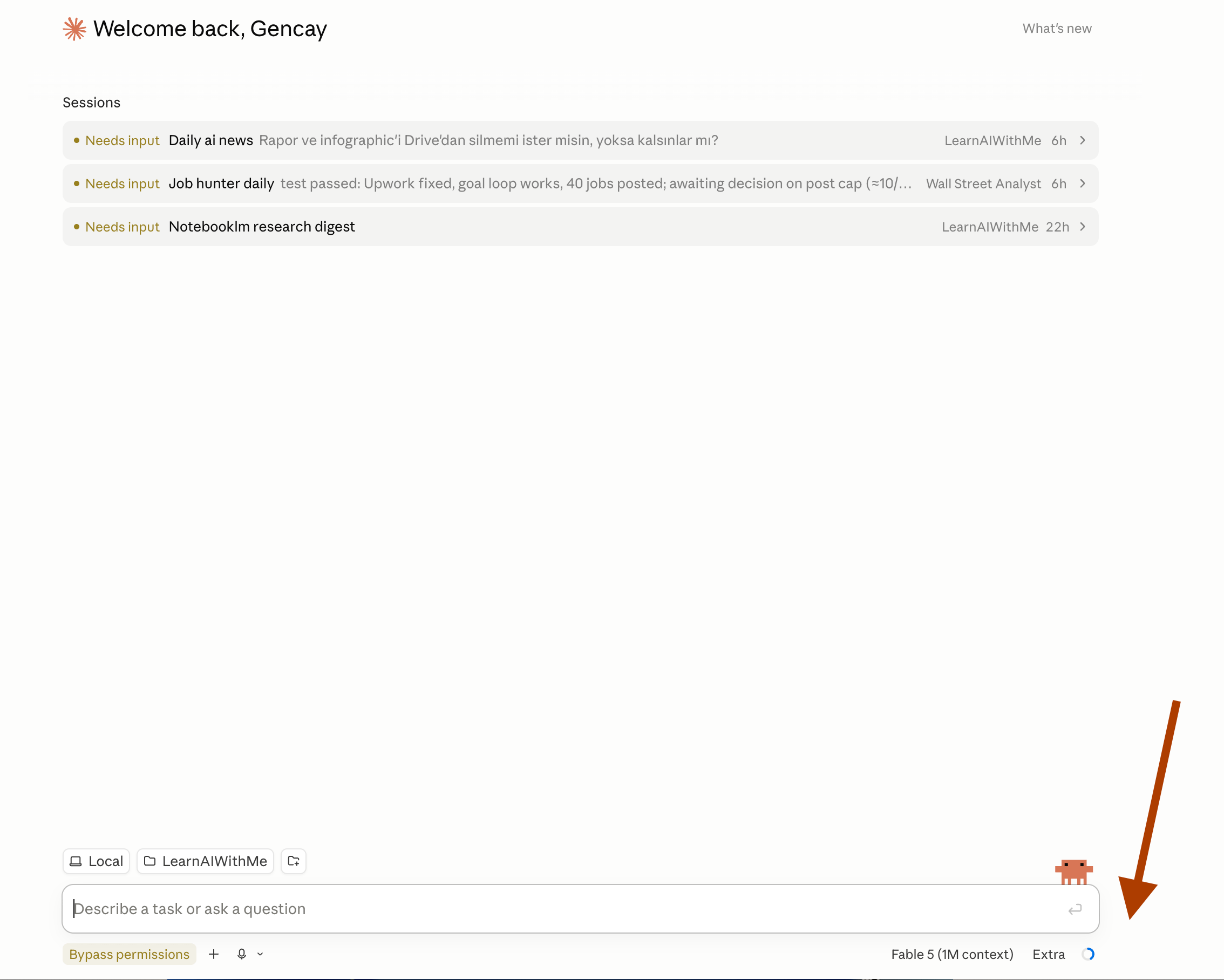
Next, adjust from here.
The docs are precise here.
High is the default.
Xhigh is for the heaviest work.
Medium and low cover routine tasks.
The line worth framing, low effort on Fable 5, often beats xhigh on the models you used last month. (Opus.)
There is a catch.
On routine work at higher effort, Claude Fable 5 can gather context and deliberate beyond what the task needs.
That's where unrequested tidying comes from.
So if you need creativity, choose higher efforts.
Old way
Fix the typo in the header of my landing page.

(running at default effort — the model re-reads the whole
codebase, deliberates, and "tidies up" three files you
never mentioned)
New way
[Effort: low]
Fix the typo in the header. Touch nothing else.

[Effort: xhigh]
Design the pricing page from scratch. Take your time,
explore layouts, surprise me.
What changed.
On routine work at higher effort, Fable 5 gathers context and deliberates beyond what the task needs.
That's where the unrequested cleanup comes from.
Routine task, low effort.
Creative or capability-sensitive task, xhigh
Do this now.
Stop treating effort as a quality slider.
It's a scope dial.
Match it to the task before you type the prompt.
3. Intent
Claude Fable 5 tends to perform better when it understands the intent behind a request
Fable 5 works like a person more than an AI.
It needs the intent behind the task.
It is not your yes-man.
Old way
Rewrite my CV summary.New way
I'm applying for a project manager role at a construction firm.
They need proof I can run budgets and crews. With that in mind,
rewrite my CV summary.
What changed.
Fable 5 uses intent as an input.
Give it the goal behind the task, and it connects the work to your goal instead of guessing one.
Do this now.
One line of why before every what.
4. Boundaries
Claude Fable 5 is more creative than other models, which needs attention.
The attention here is on defining boundaries.
The team admits the failure mode in plain terms.
Fable 5 can occasionally take unrequested actions.
Old way
My deploy script is failing, here's the error log.

(the model "helpfully" edits the config, restarts the
service, and creates a backup branch — you only wanted
to understand the error)
New way
My deploy script is failing, here's the error log.

When I'm describing a problem or thinking out loud,
the deliverable is your assessment.
Report your findings and stop.
Don't apply a fix until I ask for one. Before any command that changes state (restarts, deletes, config edits), check the evidence supports that exact action.
What changed.
The model now treats your problem like a to-do item.
You vent about a bug, it starts fixing things you never asked it to touch.
One line telling it "look, don't touch" puts you back in control.
Do this now.
Add one "report, don't act" line to every debugging or review prompt. Creativity is a feature until it touches production.
5. Multitasking
Claude Fable 5 dispatches parallel subagents more readily than prior models
Fable is built for multitasking.
Use subagents more than you used to.
Set the boundaries and the effort level first.
Old way
Research these 5 competitors one by one.
Start with the first, I'll say "next" when you're done.

(serial work — you are the bottleneck, and the model
waits on you between every step)
New way
Research all 5 competitors.
Delegate independent subtasks to subagents and keep working while they run.
Intervene if a subagent goes off track or is missing context.
Merge everything into one comparison table at the end.
Effort: high.
Don't expand scope beyond these 5 companies.
What changed.
You used to be the project manager, feeding Claude one task at a time and waiting. Now you hand over the whole list, and it splits the work across helpers who run at the same time.
Do this now.
Find one task you currently feed Claude piece by piece.
Hand it the whole batch with a delegation line, and set effort + boundaries first, exactly like rules #2 and #4 say.
6. Memory: The Fable 5 Notes File
Claude Fable 5 performs particularly well when it can record lessons from previous runs and reference them.
Provide a place to write notes, as simple as a Markdown file.
The markdown files became popular after Claude Code.
I explained the importance of CLAUDE.md months ago and I even built a SaaS on top of one file.
Anthropic now recommends the same pattern for every project you run, a notes file the model reads and writes.
Old way
(nothing. every week you re-explain the same allergies, the
same budget, the same picky eater for the weekly meal plan)
New way
Open notes.md before you start.
Store one lesson per note, a one-line summary at the top.
Update instead of duplicating.
Delete what turns out wrong.
The underrated part sits one paragraph lower in the docs.
You can bootstrap the memory from history you already have.
Reflect on the previous sessions we’ve had together.
Use subagents to identify core themes and lessons, and store them in [X].
Make sure you know to reference [X] for future use.
What changed.
Week two stops asking what week one already answered.
I run my own agents on this pattern.
The notes file is now worth more than the agents themselves.
Do this now.
Give the model a file to remember with. Context windows end.
Files don’t.
7. Vision
Claude Fable 5 interprets dense technical images, web applications, and detailed screenshots with substantially higher accuracy, often while using fewer output tokens
The quiet upgrade nobody is talking about.
That means, it works with technical images, applications or screenshots in detail way better with higher accuracy.
Old way
(you, retyping the numbers from a bank statement photo
into the chat)
New way
[paste the photo]
Pull every transaction into a table, grouped by category.
The photo is blurry, crop and zoom as needed.
What changed.
The model fixes the image now.
Do this now.
Paste, don’t transcribe.
8. The rule that breaks the others
One more thing from the docs, and it carries this whole article.
Old way
(your 200-line custom instructions, written for Opus, pasted as-is)New way
My old model rules are gone on purpose.
Your defaults beat my micromanagement.
Push back on any line above that hurts the work.
What changed.
Anthropic says it themselves.
Skills and prompts written for earlier models are often too prescriptive for Fable 5, and they can degrade output quality.
The instructions you wrote to fix Opus are now bugs.
I took one of my own production skills and cut it in half. Same task, two runs.
Build Games with Claude Fable 5
I saw a lot of impressive use cases.
So I tested one myself.
I missed the games I played back in the 2000s.
I wanted to rebuild a few with Claude Fable 5.
I did not want to start from scratch.
I asked Fable 5 to find working versions on the web first.
Here is the interesting part.
All three took under an hour to build.
I will play them properly once they are done.
Worms
Quake III Arena
Midtown Madness
Next Steps
Claude Fable 5 is not a smarter Opus. It is a different worker.
Opus waited for instructions. Fable wants the whole problem.
So the 8 rules come down to one habit.
Give it the goal, the limits, and the freedom to move. Then get out of the way.
Right now, you cannot. The model is suspended. But I hope it will come back sooner.
So treat this as your head start.
Most people will meet Fable 5 cold on the day it returns.
You will already know how to brief it.
Save this. Pick one rule. Use it the moment the model is back.
And when you build something with it, a game, an agent, anything, reply and show me.
I read everyone.
See you in the next one.
USA government officials/politicians have invested 💲into the companies that are competing with Anthrophic.
https://rossboulton1.substack.com/p/anthropic-fable-5-disabled?r=2leuaj&utm_campaign=post-expanded-share&utm_medium=web