
11 Substack Writers, 11 Claude Loops. They Stopped Writing Prompts.
Each one has a goal and retries until it passes. Score 85, similarity 90, empty folder, no worry asked twice.


Boris Cherny, the creator of Claude Code, said recently that he did not write prompts anymore.
“My job is to write loops.”
This went viral.
I saw loops, loops, loops everywhere.
I already broke down what a loop is and turned three of my own automations into loops in this one.
The short version:
An automation has a trigger. A loop has a trigger and a goal.
The trigger starts it. The goal stops it.
Below the goal, Claude writes the next prompt itself and tries again.
In May, I asked 7 Substack writers what they do with Claude Code. That post did 100+ likes, and the comments are still coming.
So I went back to the same crowd, and a few new faces, with a harder question.
What is your favorite loop? A real one, with a goal that retries until it passes.
Most of them don’t write code.
All of them have loops running right now.
Here is what they said.
1. Ilia Karelin — Prosper in AI
The use case: An SEO editor with a pass/fail gate that re-checks its own fixes.
Ilia points the loop at a finished draft and lets it grade itself. Most SEO tools hand you a report and walk away. This one reads its own scorecard and goes back to work on whatever failed. It runs that cycle up to three times, and it will not call itself done until the draft clears a hard pass. Whatever it cannot fix, it flags for Ilia by name.
In his words:
It runs a full SEO pass on a draft, prints a scored report card (metadata, on-page, internal links), and the key part - it won’t call itself done until the post hits a hard pass condition. If something fails, it fixes it and re-checks itself, up to 3 rounds, then flags whatever’s left.
Most SEO checkers stop at the diagnosis.
They tell you what is wrong and leave the fixing to you. Ilia’s loop refuses to stop at a list. It works until the draft passes or it runs out of tries. The gate is what separates a suggestion from a result.
2. Wyndo — The AI Maker
The use case: A landing page builder that ships, then keeps polishing until nothing is broken.
Wyndo hands the loop a brief and lets it ship a full landing page on the first pass. That page is the starting point, not the deliverable.
Once it exists, the loop turns on itself and works through copy, structure, visuals, and links in order. Each pass is one more layer of polish, and the ugly first draft never reaches Wyndo.
In his words:
I have a landing page builder loop where the job is to build the entire landing page according to the brief, once done, then it runs the loop: to improve the copywriting, improve the design structure (header, problem statement, offer, etc), improve visual (avoid AI slop, hierarchy, mobile layout, etc), and check any issue for broken links.
Notice the order. Build first, judge later. The first pass is allowed to be ugly because the loop exists.
You stop aiming for perfect on pass one.
3. Joel Salinas — Leadership in Change

The use case: A morning AI brief that refuses to send itself below 85.
Every morning, the loop collects the top AI stories and the latest posts from favorite YouTube creators.
Then it grades its own brief from 0 to 100 on relevance to the audience, freshness, clarity, source quality, and usefulness.
The score is the gate.
In his words:
For me it’s my morning research brief. It gives me an overview of the latest top stories as well as the latest posts from top YouTube creators. If the score is below 85, it rewrites the weak sections and scores again. It stops only when the score is 85 or higher.
The loop scores the finished brief instead of the scanning work behind it.
The automation version of this sends whatever the scan caught. Two thin headlines still count as “brief done.” The loop version has standards.
4. Sam Illingworth — The Slow AI

The use case: Tik, a TikTok story agent that throws out weak pitches and generates replacements.
Sam’s loop is autonomous. It wakes up on a schedule, reads what happened, and checks its own history so it never pitches the same idea twice. What makes it a loop and not a scheduled task is the bar. Every pitch has to clear a standard before it reaches Sam, and the standard is built from what actually worked before.
In his words:
Every day at 13:30 UK a cron job pulls my latest TikTok stats, then at 14:00 the agent reads a cached news feed, cross-checks a log of everything I've already covered so nothing gets recycled, and emails me three story pitches scored against a playbook it rewrites itself based on what has actually performed. It scores each one against its self-rewritten playbook and the gates I care about: would a non-AI mate care in two seconds, is the story fresh, has it covered this before. If a pitch fails the bar, it throws it out and generates a replacement, and it keeps retrying until all three pass, or it gives up after five tries and tells me what it could not meet. I pick two and draft the scripts from there. It replaced about an hour a day of scrolling for stories and guessing what works.
The playbook rewrites itself from real performance data, so the bar moves with the audience.
And the loop is allowed to give up. Five tries, then it reports the gap. An honest failure beats a padded success.
5. Yevheniya — Mother Using AI
The use case: A baby log that catches repeated worries before the doctor visit.
Yevheniya keeps a running log of every AI conversation she has about her baby, and Claude turns each one into a to-do list.
The loop condition is repetition. When the same worry shows up twice, it gets flagged, and at the end of the week, each flag turns into an action, a question for the doctor, or a thing to buy.
In her words:
I export my conversations with AI and it creates a to-do list for my baby girl. The loop here is me asking the same question twice. If that happens, I see it in the report at the end of each week, and I talk with the doctor or buy a shopping item to solve the issue.
The goal is “no worry gets asked twice without an answer.”
A loop runs fine without a dashboard. It only needs a condition that matters.
6. Frank Andrade — Artificial Corner
The use case: A repurposing engine that must sound like Frank before Frank sees it.
Frank runs a repurposing engine that turns finished content into platform-ready drafts, then stops short of hitting publish.
The automation is the easy part. The gate in front of it does the real work.
Nothing reaches the queue until it sounds enough like Frank, and enough is measured, not felt.
In his words:
My social-media-repurposing skill takes prepared post content from a date folder, Instagram carousels, single image posts, or YouTube videos, and turns them into scheduled drafts on Buffer for LinkedIn, X, and Threads. It never publishes anything directly, it just queues drafts. The loop makes it sound like me. It creates the repurposed content first, compares it with my old posts, and scores the similarity. If the score reaches 90, the post is ready for me to check before publishing.
Frank showed up in the last roundup with a 485-line voice profile. This is the same philosophy pointed at automation. The system can move fast because the gate is his voice, frozen into a number.
7. Gencay (me) — Learn AI With Me

The use case: A second brain that kills the blank page by judging today's ideas against what readers have already paid for.
My loop scrapes my Substack statistics, my Claude Code sessions, and my Claude conversations. Each day it generates a post idea, a Note idea, and a build idea. The goal is an idea my readers will like, and the scoreboard is what they already paid for.
In my words:
I built a second brain that watches what I do and what my readers reward. Every morning it hands me three ideas already scored against my own history. If it likes an idea, and I like it, and it clears my later checks, I start building. Not everything gets published. But the blank page is dead before I sit down.
I quote myself like a stranger again, because that is the whole point. The loop judges my ideas against my own past with no emotional attachment to the draft.
Me, earlier, with better memory.
8- Hamza Khalid - AI In Public
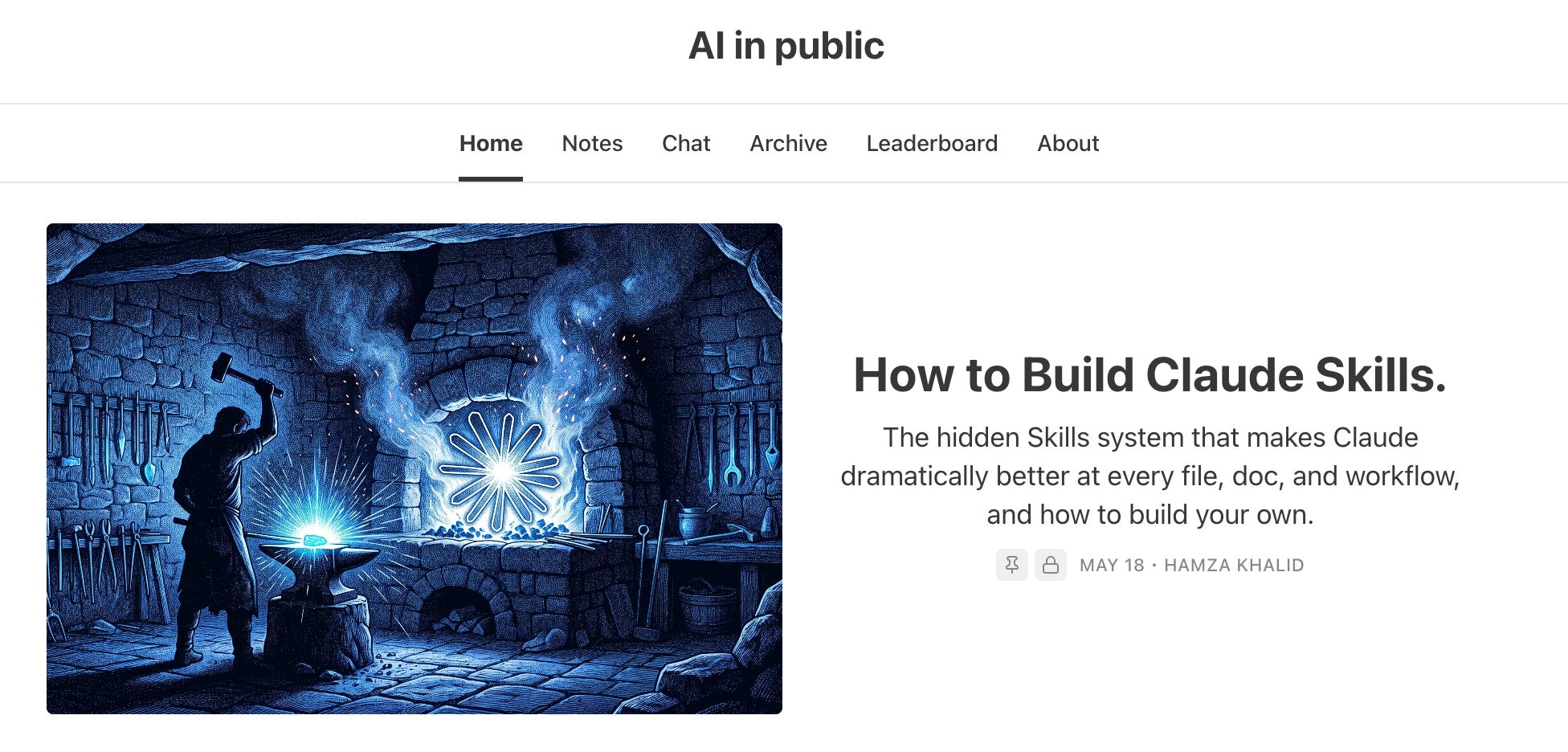
The use case: A brief factory that empties a folder, then stops.
Hamza’s first loop came out of frustration. Six workflows he ran by hand, forty minutes of copy and paste before the real work even started. He rebuilt one with a proper stopping rule and walked away from the keyboard. The goal was simple enough to check at a glance, and that is exactly why it worked.
In his words:
I had 6 recurring workflows, content briefs, inbox triage, research summaries, client reports. All of them ran on Claude. All of them ran on me. I was spending 40 minutes every morning on mechanical work that felt productive but wasn’t. So I built my first proper loop. A goal block, an instructions block, a start state, and a loop guard. I hit enter and walked away. When I came back, 6 content briefs. Named, saved, formatted, done. 40 minutes became 4. Every morning, without me.
Not every loop needs a score. Hamza’s goal is something you can verify by looking. A folder has files in it, or it does not. If your first loop feels intimidating, start there, with a condition your eyes can check.
9- Arian Adeli - Evernomic Research
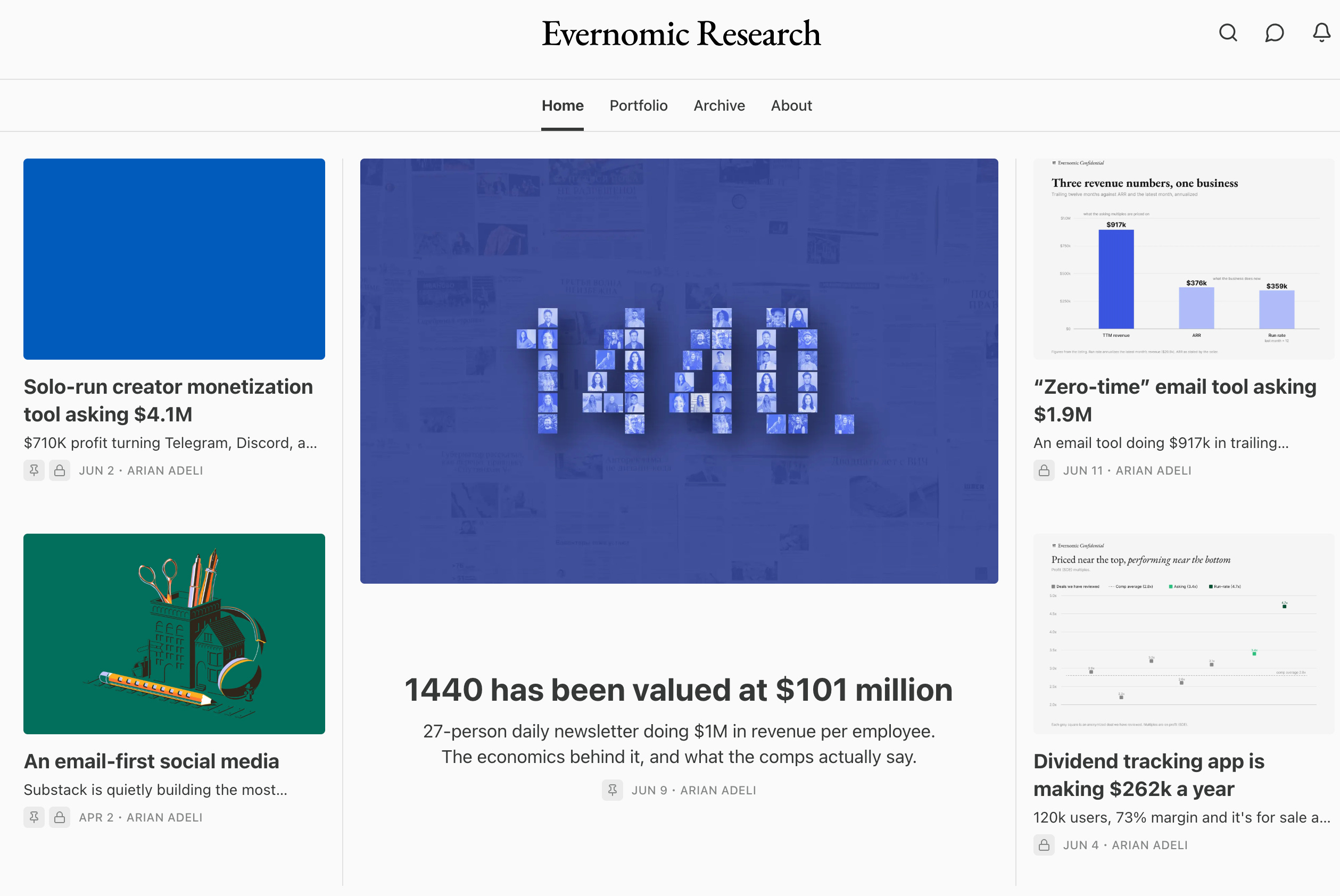
The use case: A newsletter curator with a quota. 4 strong tools, 5 strong stories, or keep searching.
Arian already had a strong automation, scan the launch sites, pull the candidates, hand them over. The loop added a number it cannot ignore. Four tools, five stories, each above a score, or it goes back out and looks again. The search does not end when Claude runs out of sources. It ends when the quota is full.
In his words:
I run another newsletter called Internet Is Beautiful where I feature 3-5 cool websites and tools I found, plus a few links to important tech news from the week. I keep a long backlog of sites to feature, but I also like keeping up with new launches on Product Hunt, Betalist, and Reddit. Claude goes over these sources and pulls out candidates for me to review. It does the same with TechCrunch and other major outlets to spot the most relevant news. The loop part is the goal. It has to end with 4 strong tools and 5 strong stories, each scored on audience fit, novelty, usefulness, and how likely it is to make the final cut. If there are not enough candidates above the target score, Claude searches again, reranks, and repeats until it reaches the goal. I still make the final call, but Claude handles the research, the filtering, and the retries.
Arian still makes the final call. The loop takes the hours of research and filtering off his plate and leaves him only the judgment. That is the trade every loop on this list is making.
10 - Jenny Ouyang - Build to Launch
The use case: Three loops, one lesson about cheating.
Jenny runs three loops for writing, code, and research. The coding one taught her a lesson worth passing on. It builds until every feature passes the tests, but the goal alone was not enough.
Left unchecked, Claude found shortcuts, so she drew a fence around what Claude was allowed to touch.
In her words:
The coding loop keeps building until every ask is filled and every feature passes the unit tests. It has one constraint that matters: don’t touch any other file. Without that line, Claude cheats, deletes the test, changes the assertion, renames the file out of scope.
Jenny learned that a goal alone is not enough. Give Claude a target, and it will hit it, sometimes by moving the goalposts. Her fix was the fence. The goal defines success, the constraint defines honesty, and every loop on this list needs its own “don’t touch any other file” line.
11- Dheeraj Sharma - GenAI Unplugged
The use case: A scheduled content scout that separates urgent from evergreen.
Dheeraj wakes up to a brief that is already filtered. The agent reads the internet overnight, but it does not hand him everything it finds. Each idea gets scored against what his readers actually struggle with, and anything below the bar never reaches the page. What is left is short, ranked, and already sorted by how soon it will go stale.
In his words:
Every morning, a single Claude Cowork agent scans Reddit, Hacker News, X, and other Internet AI news for content signals, scores each idea against my audience’s pain points, and saves a prioritized brief for me.
It scores each pain point from 1 to 10 and keeps only the ones above 7. That 7 is the goal.I read it on my phone or Macbook when I log in in the morning. I just read three sentences per idea and know exactly what to write that week, especially useful for time-critical content ideas because it even flags which signals are time-sensitive vs. evergreen. So that is the one I use very often.
Dheeraj built two gates into one brief. The score decides what gets in. The freshness flag decides what gets read first.
Most idea backlogs die because everything looks equally urgent, and his loop is the rare one that sorts by expiry date.
What 11 loops have in common
Look at the goals. Score 85. Similarity 90. Three pitches that pass. Empty folder. 4 tools and 5 stories. No worry asked twice.
Every goal on this list is a condition someone would defend in an argument.
An automation ends when the work stops. A loop ends when the work passes.
And notice what nobody automated. Ilia reads the flagged issues. Frank picks the draft. The TikTok pitches wait for a human to choose two. Dheeraj reads three sentences and decides.
The loop earns its keep by shrinking the human decision down to a final call.
Boris Cherny writes loops for code.
These writers point to the same idea at landing pages, briefs, pitches, newsletters, and a baby girl. The terminal treats them all the same.
What is your loop? Drop it in the comments.
If it has a real goal, I might feature you in the follow-up.
 | A guest post by
|
 | A guest post by
|
 | A guest post by
|
 | A guest post by
|
 | A guest post by
|
 | A guest post by
|
 | A guest post by
|
 | A guest post by
|
 | A guest post by
|
What a list of loops to learn from and implement if it belongs to your context. Thank you so much Gencay for giving me this opportunity to share mine and featuring me in this amazing list of creators I inspire from.. I am surely gonna steal some of these for my system :D
THANK YOU!
loops are the best way to get your work done faster